The University Keeps Building Anyway
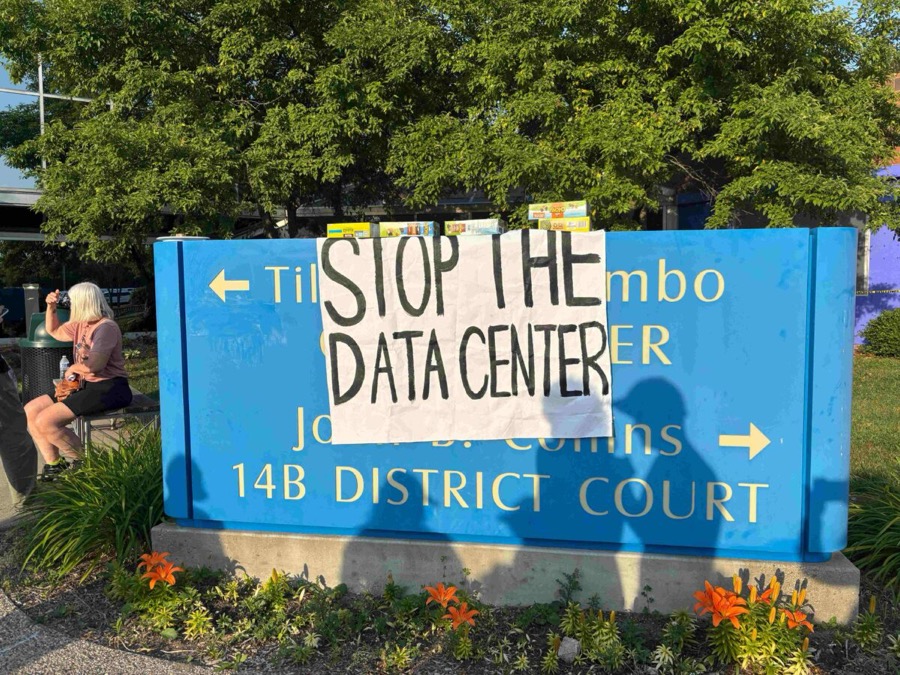
The university, along with and Los Alamos National Laboratory, want to put a $1.2 billion data center in Ypsilanti Township. The community has repeatedly said no for over a year, but the university does not seem to care. The university has spent that same year acting like the answer doesn't matter (they cant hear them over the sounds of the data center!).
The most recent update to this came from the Ypsilanti Community Utilities Authority, which voted unanimously on April 22 to impose a 12-month moratorium on water and sewer hookups for data centers while it studies capacity and environmental impact. The day before that vote though, Barnes & Thornburg, the firm representing U-M, sent YCUA a letter calling the moratorium "unlawfully discriminatory." The university argued there's no documented capacity problem, that YCUA's own director had confirmed the facility's 200,000 gallons a day fit comfortably within the system's 8 to 10 million gallon capacity, and that singling out data centers as a category amounted to illegal discrimination against data centers. It closed by reserving the right to "pursue all rights and claims for necessary relief." A public university sent a legal threat to a public utility for declining to commit water to a nuclear weapons research facility.
I am going to say that again. A public university sent a legal threat to a public utility for declining to commit water to a nuclear weapons research facility.
The pattern is clear as day. Three separate resolutions now stand against the project, one from the city, one from the township, one specifically targeting the moratorium itself. Residents have shown up meeting after meeting. A Saline resident drove to Ypsilanti just to describe what a data center actually looks like once it's built, comparing the one near him to two airports fused together. None of it has moved the university off its site. The Textile Road property closed in March. Willow Run remains a backup, contingent on a deal with the American Center for Mobility that hasn't materialized. As a public university, they doesn't need township zoning approval to build either one, which means they can do whatever they want, without any regard for the community.
Only one regent, Paul Brown, has been willing even acknowledge this. He told the Eastern Echo in May that building on a site the community doesn't want amounts to environmental racism, and that the burden falls on the university to make its case rather than assume it. He also voted to approve the Textile Road purchase in the first place. Holding both positions at once isn't a contradiction so much as a description of how university governance treats a regent's discomfort. They will note it but the do not care.
If you want to know about the university's actual position, there is legal letter where the university's actual position is stated. because it wasn't written for the public. This letter was written for a utility board, and it reads like a company asserting a property right to municipal water. The argument that capacity studies are pretextual because the utility already has spare capacity skips past the reason the studies exist. YCUA's last wastewater master plan dates to 2018, built around none of the assumptions a half-million-gallon-a-day facility now requires, let alone two of them, with Thor Equities' Augusta Township project drawing from the same system.
A public university used outside counsel to tell a small-town utility board that protecting its own water studies process was illegal, the day before that board voted on it anyway. The vote held. The letter stands as a record of how little the university expected that to matter.